

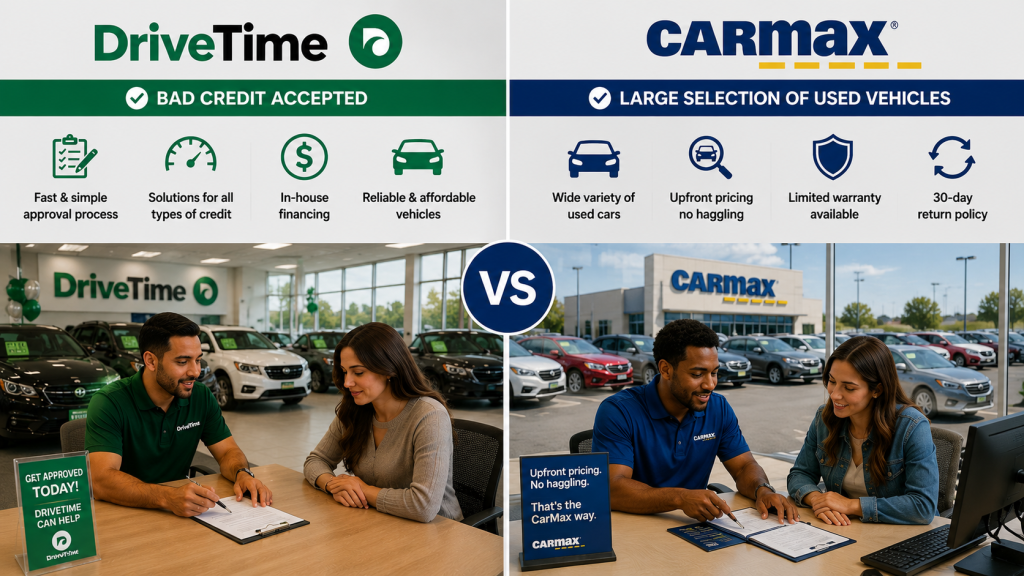
See how both options compare before choosing where to finance your used car.
Use the information below as a decision checklist before moving to the official site. A strong car-financing choice should be understandable in plain language: what the vehicle costs, what the loan may cost, what the monthly commitment looks like, and which conditions could change after the application is reviewed. Taking a few extra minutes to compare these points can help buyers avoid confusing offers and focus on the option that fits their transportation needs and budget.
What to review before you choose
Start with the total price of the vehicle, not only the advertised monthly payment. A lower payment can be created by stretching the loan term, adding a larger down payment, or rolling fees into the balance. Those choices may be acceptable, but they should be visible. Buyers should ask for the annual percentage rate, the loan term, any document or dealer fees, and the estimated total cost if the loan is paid as scheduled.
Credit profile matters, but it is only one part of the file. Lenders and dealers may also review income, residence stability, debt obligations, down payment, vehicle age, mileage, and whether the buyer has a trade-in. A shopper with challenged credit can still improve the file by bringing proof of income, checking reports for errors, and comparing more than one option before signing.
Key points for U.S. car buyers
- DriveTime may be more accessible for shoppers rebuilding credit.
- CarMax can provide a broad used-car inventory and lender comparison.
- Down payment, APR, and term length may differ widely by profile.
- Return policies, warranty options, and inventory rules should be reviewed before signing.
When comparing offers, write the numbers side by side. Include vehicle price, down payment, taxes, fees, estimated payment, APR, term length, warranty or protection products, and whether refinancing later could make sense. This prevents the decision from being based only on a fast approval message or a single attractive headline.
It is also important to think about ownership costs. Insurance, fuel, tires, registration, maintenance, and emergency repairs can change the real monthly cost of a vehicle. A slightly cheaper vehicle may not be the better option if it has higher maintenance risk or limited warranty support. A slightly higher payment may be easier to justify when the car has strong reliability, safer equipment, or a clear service history.
How to move forward carefully
Before applying, review your budget and decide the maximum payment you can manage without depending on overtime or uncertain income. Check whether the application uses a soft or hard credit inquiry. If a hard inquiry is required, compare enough information first so the application is intentional. Keep copies of all disclosures and do not rely on verbal promises that are not shown in the final documents.
For many shoppers, the smartest move is to use online research to narrow the options, then confirm the final numbers directly with the provider. If the offer changes, pause and review it again. A car loan should solve a transportation need without creating pressure that becomes difficult a few months later.
Questions to ask before signing
Ask whether the quoted payment includes taxes, registration, title, dealer documentation fees, protection products, and any optional add-ons. Ask whether there is a prepayment penalty and whether the lender reports payments to the major credit bureaus. For buyers rebuilding credit, payment reporting can matter because a consistent on-time record may support future refinancing opportunities.
Also review the vehicle history, mileage, warranty coverage, and return or exchange policy when available. Financing can make a purchase possible, but the vehicle still needs to be dependable. A cheaper approval on a car with higher repair risk may become more expensive than a slightly higher payment on a better-supported vehicle.
If two offers look similar, compare the total amount paid over the life of the loan. This number is often more useful than the monthly payment alone because it shows how interest and term length affect the real cost. A longer term may create breathing room month to month, but it can also keep the balance high for longer and increase the chance of owing more than the vehicle is worth.
Finally, remember that online information should be used as a preparation tool, not as a substitute for the official disclosures. Confirm the latest availability, state rules, and eligibility requirements directly with the provider before relying on any estimate.
Quick comparison table
| Option | Best fit | What to compare |
|---|---|---|
| DriveTime | Convenient approval path | Useful for shoppers who want vehicle selection and financing in one place. |
| CarMax | Broad used-car inventory | Helpful for comparing vehicles with a no-haggle shopping experience. |
| Credit union or bank | Outside benchmark | Can help buyers compare terms before committing to dealer financing. |
This content is informational only. Rates, availability, inventory, eligibility rules, and terms can change by state, credit profile, lender policy, and dealer participation. Always confirm the current details on the official website before making a final decision.

 Best Cars Under $30,000 in 2026: Smart Buyer Checklist
  Best Car Choices in 2026: Full Financing Guide
  DriveTime vs CarMax Financing: Quick Comparison for Used-Car Buyers